How To Remove Moss From Roof
Date Published
Essential Tools and Materials Required for Moss Removal
Effectively removing moss from a roof requires the right tools and safety precautions. Whether you are removing moss to avoid roof leaks, ensuring roof cleaning solutions are safe and effective, or addressing roof moss risks, proper equipment is crucial. Here are the essentials:
- Garden Hose: Provides controlled water pressure, safer than pressure washing for shingles.
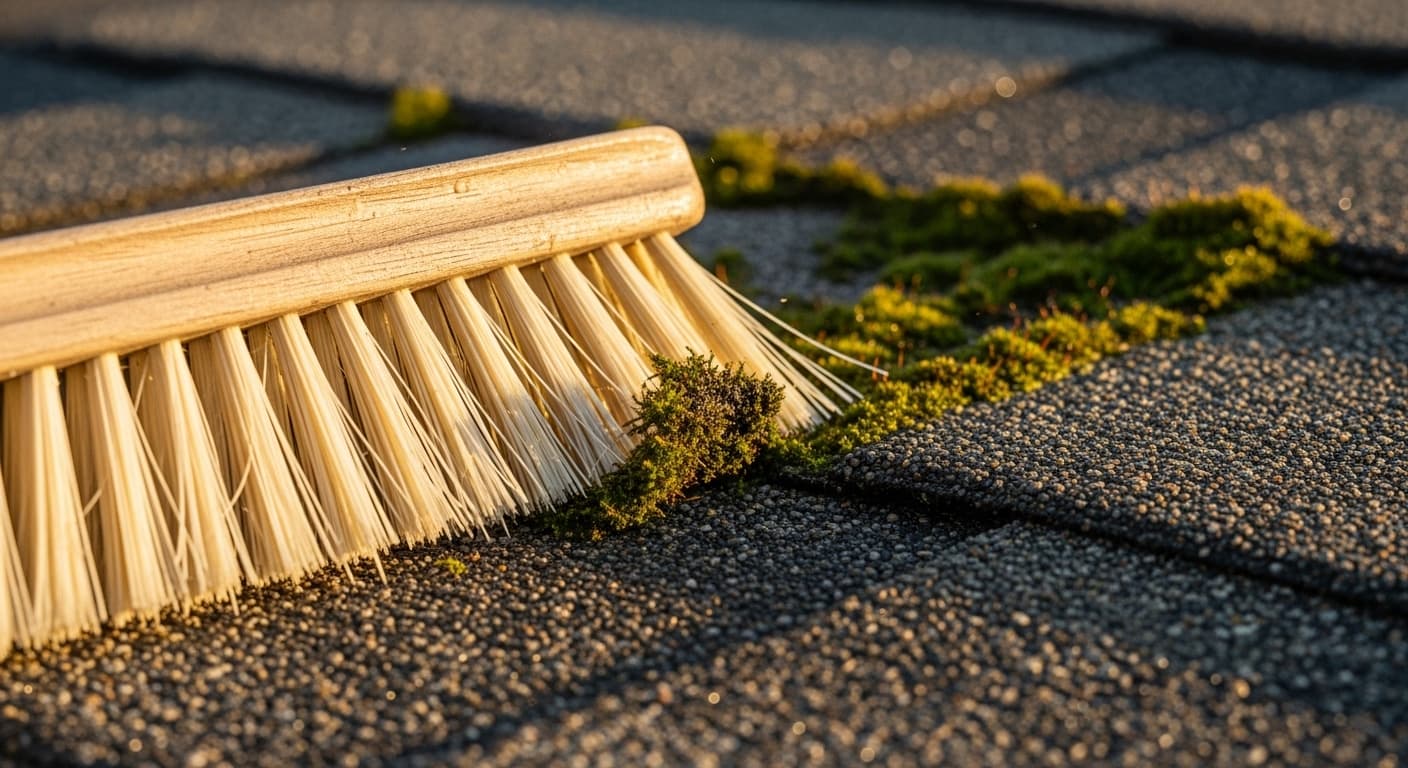
- Soft-Bristle Brush: Ideal for gently scrubbing moss off the roof without damaging shingles.
- Moss Preventative / treatment: Make sure to get FDA approved product that wont leave your ecosystem or pets at risk.
- Leaf blower: Ideal for cleaning up loose moss and debris.
- Harness: for fall protection
- Ladder: for getting on the roof
- Ladder tie: for stabilizing the ladder to the roof
Transitioning between roof moss removal and gutter cleaning enhances the success of roof cleaning frequency and benefits worth the cost.
Step-by-Step Guide to Removing Moss From Your Roof
Moss removal is essential for maintaining your roof’s integrity and preventing potential leaks. Follow these steps to ensure safe and effective roof cleaning while avoiding risks associated with improper pressure washing techniques.
1. Inspect and Prepare
- Evaluate the roof: Check for moss severity, leaks, or damage. Understand the difference between moss and algae.
- Safety preparation: Wear protective gear and ensure secure roof access.
2. Remove Moss
- Scrub gently: Use a soft-bristle brush to prevent damaging shingles while removing moss.
- Avoid pressure washing risks: Excessive force can weaken roofing materials.
3. Apply Roof Cleaning Solution
- Select a safe solution: Use non-corrosive, environmentally-friendly products designed for roof moss removal.
- Spray evenly: Apply the solution across moss-covered areas using a low-pressure sprayer.
4. Rinse and Clean
- Rinse thoroughly: Use a garden hose for controlled water flow to avoid flooding or leaks.
- Check for debris: Reinspect gutters for any clogs that may have been created.
Regular roof cleaning is well worth the cost, considering it helps with preventing roof failure risks and maintaining home longevity.
Preventive Measures to Keep Moss From Returning
To avoid recurring moss on the roof, homeowners must adopt proactive roof maintenance practices. Proper roof cleaning frequency plays a significant role in keeping growth at bay. Scheduling regular inspections for moss and algae presence aids in early prevention, especially since moss and algae have distinct differences requiring different treatments.
Gutter cleaning prevents water stagnation, which encourages moss formation. Avoid pressure washing risks by opting for safe techniques like gentle scrubbing with roof cleaning solutions. Prune overhanging branches to increase sun exposure, reducing dampness. Focus on airflow and drainage improvements for effective long-term results.
Understanding the Impact of Moss on Your Roof
Moss on a roof may seem like a minor problem, but it can cause significant damage over time. Unlike algae, which usually leaves discoloration, moss establishes roots and grows across the surface, trapping moisture against shingles. This excess moisture can lead to leaks, mold growth, and roof deterioration. Moss growth increases maintenance needs and highlights the importance of roof cleaning. Ignoring moss can reduce your roof's life span, making roof cleaning frequency a priority. While pressure washing can remove moss, risks like structural damage mean safe, effective solutions are essential.
Gutter cleaning is a strongly recommended task during / after roof cleaning. Helps reduce risk of over flow and water damage to your home.
Related Reading
Continue exploring these related topics:
Expert Advice
Have More Questions?
We answer the most common questions about home maintenance & cleaning. We share tips, resources, and information that can help you stay on top of your projects and save you time and money in the long run.